How to Price Garage Sale Items
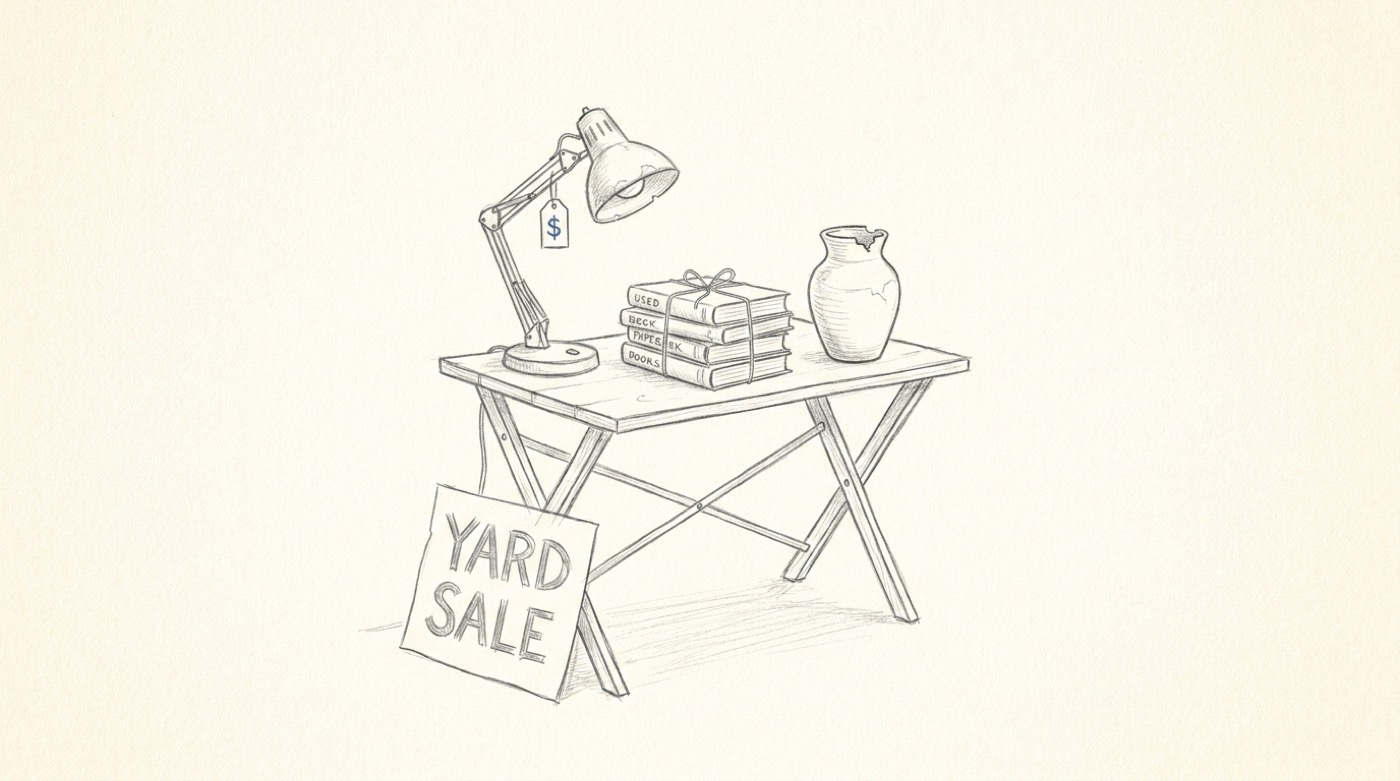
The hardest part of running a garage sale isn't the table, the signs, or the cash float. It's looking at a lamp from 2014 and trying to decide whether to charge $5, $15, or $40.
Price too high and your driveway is full of stuff at the end of Sunday. Price too low and you're giving away a $200 chair for $20 to a stranger who knew exactly what they were doing.
This page is a quick, opinionated guide to pricing garage sale items — plus a free way to check yourself before you tape on the price tag.
The 25%–33% rule (and where it breaks)
The folk wisdom is to price secondhand items at 25%–33% of the original retail price, then drop further as the day wears on. That's a fine starting point, but it falls apart in two directions:
- Vintage and collectible items are often worth more than they retailed for. Mid-century lamps, designer jeans, old toys, vinyl records — the 25% rule will give them away.
- Items past their prime — old electronics, kids' clothes from a vanished trend, anything dusty and scuffed — are worth less than 25%, sometimes a lot less.
So the rule is a starting point, not an answer. The answer is checking each item against current market data.
Use a photo to spot-check before you tag
This is what Costcam.app is built for. Snap a photo of an item, the AI identifies what it is, and you get a price range based on current market signals — what similar items are selling for right now on Amazon, eBay and elsewhere.
It's free, it works on your phone in the browser, and it takes about ten seconds per item. The price ranges aren't an appraisal, but they're a much better baseline than guessing.
For a garage sale you can use it two ways:
- The night before, walk through your boxes and snap anything you're unsure about. Mark the surprising ones (the lamp that turns out to be worth $80, the jacket that's worth $200) so you don't accidentally let them go for a dollar.
- The morning of, when a buyer is hovering over an item and asking "would you take less?", check the photo first.
A rough pricing table for common categories
These are the ranges I'd start at for typical garage-sale condition (decent, working, no damage):
| Category | Typical garage-sale price |
|---|---|
| Paperback books | $0.50–$2 |
| Hardcover books | $1–$5 |
| Adult clothing (chain brands) | $1–$5 |
| Adult clothing (designer / vintage) | $10–$60+ |
| Kids' clothing | $0.50–$3 |
| Toys (loose, used) | $0.50–$5 |
| Toys (sealed, vintage, collectible) | $20–$200+ |
| Kitchenware / dishes | $0.50–$5 each |
| Small appliances (working) | $5–$25 |
| Furniture (small, IKEA-tier) | $10–$40 |
| Furniture (solid wood, vintage) | $40–$300 |
| Bicycles (adult, working) | $40–$150 |
| Tools | $1–$20 |
| Electronics (older) | 20–30% of original retail |
The right column above all turns from a guess into a number once you check a photo.
Things that surprise people
A few categories where amateur garage sale pricing tends to leave money on the table:
- Mid-century furniture and lamps, even ones that look ordinary. If it's solid teak or has a clean modern silhouette, it's probably worth more than $20.
- Vintage Pyrex, CorningWare, and certain dish patterns. Some patterns have collector followings.
- Lego sets, especially anything sealed or complete with the box.
- Vintage tools — old hand planes, levels, anything cast iron with a brand name stamped on it.
- Old cameras and lenses, even ones that don't power on.
- Designer clothing tags — Ralph Lauren, Patagonia, Filson, anything with a real wool/leather pedigree.
If any of these are in your pile, photograph them before you label them.
Negotiation tips that actually matter
- Price 20% above what you'll actually take. People want to feel like they negotiated. Stickers reading $5 that go home for $4 is the whole game.
- Bundle low-value items. "Any 5 books for $2" moves more inventory than 30 books at $0.50 each.
- Drop prices after lunch. By 1pm on Sunday you're choosing between hauling boxes back inside or making half what you hoped. Make half.
- Cash only, small bills. Have $40 in $1s and $5s ready before you open.
- Take the offer. If somebody offers $15 on a $20 lamp, take it. The probability of selling it for $20 later is lower than you think.
The bottom line
You don't need to research every item to a precise dollar. You just need to avoid two failure modes: pricing the valuable stuff like junk, and pricing the junk like it's valuable.
A 10-second photo check on the items you're unsure about handles both. Try it: point your camera at the item on costcam.app and you'll have a price range before you've finished looking for the masking tape.