Free Antique Identification App: Identify and Value Antiques From a Photo
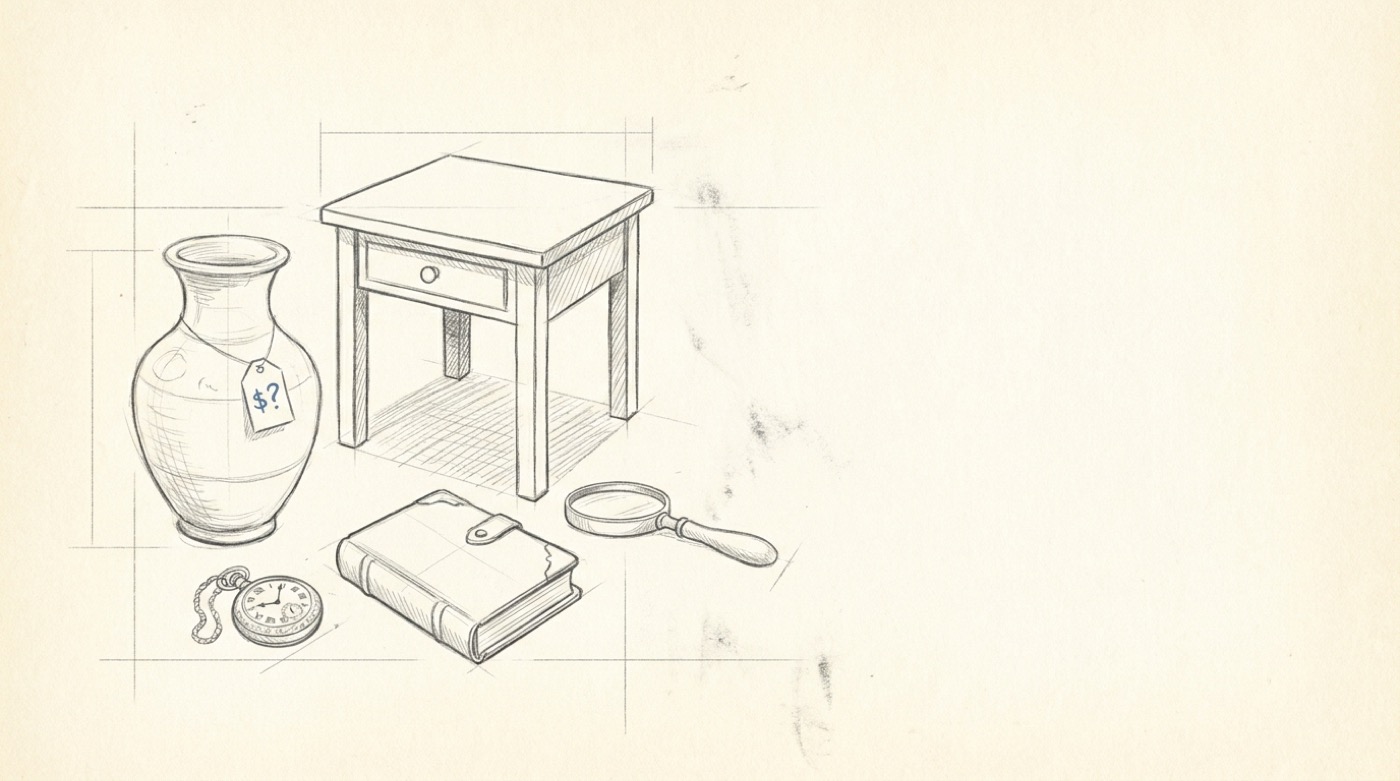
You inherited the box. Or you bought it at an estate sale. Or you walked past a stall at a flea market and felt the back of your neck tingle. Now you're holding a vase, a brooch, a clock, a dusty toy — and you have no idea whether it's worth $5 or $5,000.
This is what a free antique identification app is supposed to solve. There are a few that take a photo and try to identify the item — most are paywalled, slow, or load you up with ads. Costcam.app does it in a browser tab, for free, with no signup. Snap a photo, get an identification with brand and era cues if visible, plus a current market value range based on what comparable items are selling for online.
It is not a substitute for a Sotheby's specialist on a Ming vase. It is a substitute for "how much do you think Grandma's clock is worth, do you have any idea?", which is the question being asked 99% of the time.
What it does well
For most household antiques and collectibles, a photo is enough information for a useful first pass:
- Mid-century modern furniture — readable silhouettes, often signed or stamped under the seat
- Vintage cameras — Leica, Hasselblad, Polaroid, Pentax — model numbers are usually visible
- Vinyl records — labels and sleeves photograph cleanly
- Pottery and porcelain — maker's marks, glaze patterns, distinctive shapes
- Watches and jewelry — brand stamps, hallmarks, design vocabulary
- Toys — particularly Star Wars, LEGO, Hot Wheels, Barbie, anything boxed
- Tools — Stanley planes, Disston saws, anything cast iron with a maker's mark
- Books — first editions, dust jackets, signed copies (visible from the cover and copyright page)
- Coins and currency — usually requires a clear front-and-back photo
What it can't do (and where to go next)
- Authentication. A photo can suggest "this looks like a 1950s Eames lounge chair", but it can't tell you it's not a reproduction. For real money, you still want a specialist's hands on it.
- Marks and signatures up close. If the value depends on a tiny stamp on the underside, take a separate close-up photo of the mark.
- Damage you can't see. A vase that looks pristine in a photo might have a hairline crack in person, which can drop value 80%.
- Provenance. Two identical paintings with different histories can have a 100x price spread. The app can't see the receipt from 1962.
For anything where the photo identifies a piece worth more than ~$500, the right next step is a specialist appraiser, not a confident-feeling app.
A practical workflow for an estate or a box of finds
If you've just inherited or bought a pile of items, here's the fastest way through:
- Lay everything out somewhere with even, indirect light (a kitchen counter near a window works).
- Photograph each item one at a time. Plain background. Get any maker's marks in a separate close-up.
- Run each photo through costcam.app. Note the items it returns with high confidence and a meaningful value range.
- Sort into three piles: likely valuable (worth a closer look), probably modest (sell or donate), and unknown / low confidence (research separately or take to a local antique dealer).
- For the "likely valuable" pile, get a second opinion before listing or selling. Reputable auction houses and antique dealers will give you a free verbal estimate.
The categories where photo-based identification really earns its keep
A few categories have such well-defined visual languages that AI gets them right surprisingly often:
- Mid-century lighting — Stilnovo, Arteluce, Sarfatti, even unsigned Italian lamps from the 60s
- Studio pottery — distinctive throwing styles and glazes
- Vintage watches — case shapes, dial layouts, brand-specific quirks
- First-pressing vinyl — sleeve art and label details
- Designer clothing — silhouettes, hardware, label fonts
- Trading cards — the printing era is legible from the card design
Why a photo-first approach makes sense
Most online appraisal services either take days, charge per item, or want you to ship the thing in. A photo-based estimate gives you a faster signal — should I bother getting a real appraisal? — for free.
Try it on whatever you're holding now: open costcam.app, point your camera, and you'll have an identification and value range in about ten seconds. Then decide if it's worth a specialist's time.